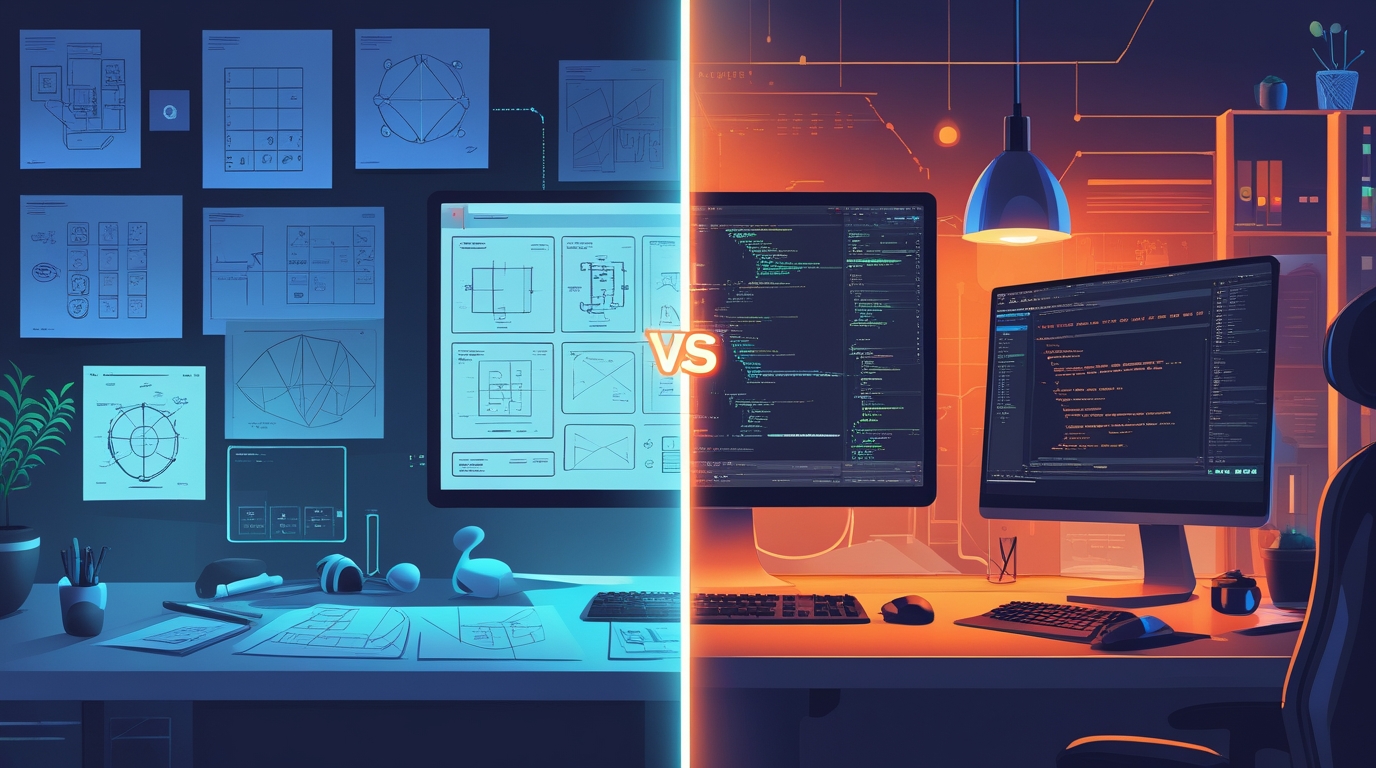
The terms “game design” and “game development” sound similar, but they are not interchangeable. Nonetheless, it is essential to comprehend the distinctions between the two fields. Each plays a unique role in transforming an idea into a successful, market-ready product.
What is game design?
Game design is the conceptual foundation of a game. It focuses on defining what a game is and how it feels. By developing mechanics, systems, and regulations, designers influence the player experience.
A game designer works on elements such as game loops, progression systems, balance, and player motivation. They decide how difficult a level should be, how rewards are distributed, and how players interact with the game world. The goal is to create a cohesive experience that keeps players engaged.
Game design answers the next questions:
- What is the core gameplay?
- Who is the target audience?
- What emotions should the player experience?
- How does the game maintain engagement over time?
At its core, game design is about intention. It defines a vision and ensures that every element of the game contributes to a unified gaming experience.
What is game development?
Game development is a practical realization of the game. It includes coding, adding visuals, audio, and technical systems.
The game development team consists of programmers, artists, animators, sound engineers, quality control engineers, and producers. They turn the designers’ ideas into a working product.
Game development answers the next questions:
- How do we technically implement these mechanics in practice?
- How will the game run on the target devices?
- What tools and engines should we use?
- How do we ensure stability and scalability?
Game development is a creative process, whereas game design is a blueprint.
Key differences
The process of designing games involves both creativity and strategy. It establishes the rules, defines the player experience, and molds the emotional journey. Game development is a production and technical process. It concentrates on developing, testing, and delivering the finished product.
Another important difference is in the deliverables. Designers create documentation, prototypes, and system concepts. Developers create code, assets, and fully functional builds.
Designers and developers work in iterations, refining ideas based on technical constraints, testing results, and player feedback.
Why this distinction matters
For customers and stakeholders, misunderstanding this distinction can lead to unrealistic expectations. A strong idea alone does not guarantee a successful game. And technical excellence cannot compensate for poor design.
Projects often fail when:
- The design is underdeveloped
- Development begins without proven gameplay concepts
- Teams treat design as a one-time phase rather than an ongoing process
Planning, budgeting, and communication can all be improved by acknowledging the division and interconnectedness of these functions.
How Melior Games bridges the gap
At Melior Games, game design and development are tightly integrated within a full-cycle production approach. From the very beginning, designers and developers work together to make sure that concepts are both innovative and technically possible.
Concepts are validated through prototyping, real-world user testing, and refinement based on the feedback. This iterative approach reduces risk and ensures that the result meets player expectations and business goals.
We create engaging games by approaching design and production as complementary disciplines, not separate stages.
Final Thoughts
Game design and game development are two sides of the same coin. One defines the vision; the other brings it to life. Neither can succeed without the other.
Understanding this distinction is important for anyone involved in game development. The finest games have a strong technological base, a clear vision, and a blend of creativity and execution. Aligning design and development from the beginning is a best practice we follow at Melior Games. This is essential if you want to turn your game idea into a polished, market-ready product.


